

First Mile
Take the Right First Step in Your PhD Journey
A 13-week live programme designed to help research scholars build strong foundations — from literature review and journal analysis to sustainable academic writing habits.
🔹 Build your research profile
🔹 Master literature review
🔹 Understand journal publishing
🔹 Start writing with clarity
Overview
First Mile is for scholars in the early stretch of their PhD
Before the literature is organized, before a research profile exists, before there's any real orientation toward how publishing works. You'll build the foundation the rest of your PhD runs on: a working literature system, a visible research profile, and clarity on how and where you'll eventually publish — so that by the time you're ready to write, you're not starting from zero.
Snapshot: choose online (13 weeks, weekly sessions) or offline (3 monthly full-day workshops). For scholars in year 1–2, or anyone restarting their research foundation.
Already past this stage and sitting on data you can't turn into consistent pages? EzhudhuGoal picks up from here.
Coverage
- Research profile setup (ORCID, Google Scholar, ResearchGate, institutional presence)
- Systematic literature search and organization across major databases
- Reference management tools and workflows
- Literature synthesis: mapping the scholarly conversation, agreements and contradictions across sources
- Identifying research gaps and building a conceptual/theoretical framework
- Publishing landscape orientation: journal tiers, indexing (Scopus, Web of Science, etc.), and how timing fits your PhD
- Reading published papers to reverse-engineer expected structure and style in your field
Who This Is For
- PhD scholars in early or middle stages
- You're in the first 1–2 years of your PhD (or restarting after a gap) and haven't yet built a system for managing your literature
- You don't have a research profile set up yet (ORCID, Google Scholar, institutional page) and know you should
- You want your literature and research foundation fully in order before you start writing seriously
- You've tried to "just get organized" on your own and it hasn't stuck without structure and accountability
Who This Is Not For
- You already have your literature organized and a full dataset, and just need to write consistently — that's EzhudhuGoa
- You have a complete draft (or close to it) and need an intensive push to finish and submit — that's EzhudhuWarRoom
- You're looking for a one-time fix rather than a foundation you'll use for years
EzhudhuGoal requires commitment. Growth comes from practice, not shortcuts.
Programme Structure
Foundation: Set up your research profile and build a systematic literature management workflow. Move from scattered PDFs and bookmarks to an organized, searchable literature base using appropriate tools.
Literature Synthesis TMove from collecting sources to making sense of them: map the scholarly conversation, identify where sources agree and disagree, locate the gap your own research will fill, and build a synthesis map.
Publishing Orientation: Understand the publishing landscape for your field, learn to evaluate journals (and spot predatory ones), and study a few target journals' published papers to know what's expected before you ever submit.
Each phase will have a core principle, core ideas to cover, core activity, and reflection exercises.
Key Features
- Small cohort with structured accountability
- Frameworks built for your discipline, not generic templates
- Guided exercises and reflection checkpoints
- Feedback on how you're synthesizing and framing your literature, not just a reading checklist
- Clear milestones to prevent drift
More importantly, they leave with a disciplined approach to scholarly writing.
Outomes
By the end of First Mile, you'll have:
- A live, complete research profile
- An organized, searchable literature management system
- A synthesis map / conceptual framework for your literature
- Clarity on 2–3 target journals for your field
Format & Delivery
Online
- One weekly live session (90 minutes)
- Mode: Online
- Small cohort
- Structured tasks between sessions
Offline
- 3 monthly full-day in-person workshops
- (Foundation Day, Literature Synthesis, Publishing Orientation)
- With independent work between each day
Frequently Asked Questions
Programme Structure & Format
How long does the programme run?
EzhudhuGoal runs over 13 weeks. The structure is intentionally spread out to allow writing habits to develop gradually rather than through short bursts of intensity. The programme is offered twice a year.
Is this an intensive workshop or an extended programme?
It is an extended programme. The design prioritises consistency and continuity over short-term productivity. The goal is to bring about a mental shift towards writing with ease.
How often do sessions take place?
Live sessions are conducted weekly, with reflection practices and activities to be completed during the following weeks. The cadence is designed to integrate with academic responsibilities rather than compete with them.
What happens during a typical session?
Sessions typically include:
- Guided reflection on writing challenges
- Structured writing discussion or framing
- Small-group conversation
- Clarification of writing tasks before the next phase
There is no performative writing or public critique.
Is there writing during the live sessions?
Live sessions focus on structure, reflection, and discussion. Writing primarily happens between sessions, within a guided framework.
Is the programme lecture-based?
No. While there is facilitation and structured input, the format is interactive and reflective rather than lecture-driven.
Will I receive templates or writing models?
The programme does not centre around generic templates. Instead, it focuses on helping participants understand how to structure their own writing process in a transferable way.
Is there homework?
There are structured writing tasks between sessions. These are not graded, but they form the core of the learning experience.
Delivery & Logistics
Is the programme online or in person?
The non-institutional version is delivered online in small, focused groups to allow participation across institutions and locations. Institutional programmes are conducted online or offline, based on the institution’s preference.
Are sessions recorded?
Recordings may be available for reference, but live participation is strongly encouraged to preserve the reflective and interactive nature of the programme.
What is the expected weekly time commitment?
Participants should allocate consistent time for writing between sessions. The programme works best when writing becomes part of a weekly rhythm rather than an occasional effort.
What if I miss a session?
While occasional absence is understandable, the programme is cumulative. Missing multiple sessions may reduce the benefit of the structured progression.
What is the group size?
Group size is intentionally limited to ensure meaningful discussion and cognitive safety.
Fit & Eligibility
Who is this programme best suited for?
It is designed for :
- PhD scholars (particularly mid-to-late stage)
- Early-career faculty
- Researchers working toward publications
Is this suitable for complete beginners in research writing?
Participants should already be engaged in academic work. The programme focuses on structure and sustainability rather than basic academic writing instruction.
Is this discipline-specific?
No. The principles of writing structure and rhythm apply across disciplines.
Do I need to be working on a specific paper to join?
While having an active writing project helps, the programme focuses on process development rather than one specific manuscript.
Is this suitable if I am facing writer’s block?
Yes. The programme addresses structural causes of stalled writing rather than offering motivational fixes.
Philosophy & Approach
Is this a productivity programme?
No. While productivity may improve as a result, the primary goal is to build a sustainable writing system.
Will my writing be publicly critiqued?
No. The programme does not involve public line-by-line critique. The focus is on understanding writing processes, not evaluating individual drafts.
Do I need to be working on a specific paper to join?
While having an active writing project helps, the programme focuses on process development rather than one specific manuscript.
Is this therapy for writers?
No. Although reflective in nature, the programme is academically grounded and structure-oriented.
What makes this different from other writing workshops?
EzhudhuGoal:
- Is extended rather than intensive
- Focuses on process rather than output
- Prioritises consistent practice over publication pressure
- Keeps groups small for depth
Outcomes & Continuity
What can I realistically expect by the end?
Participants typically gain:
- Greater clarity about their writing process
- A repeatable writing rhythm
- Reduced anxiety around beginning
Will I finish a paper during the programme?
Completion depends on individual pace and project stage. The programme supports progress, not guaranteed completion.
What happens after the programme ends?
Participants retain the structural tools and writing rhythm developed during the programme. Follow-up formats may be announced separately.
Administrative Questions
What is the fee structure?
(To be added once finalised.)
Is there a certificate of participation
(To be clarified based on your decision.)
Are institutional nominations allowed?
Yes. Institutions may nominate participants subject to cohort size limits.
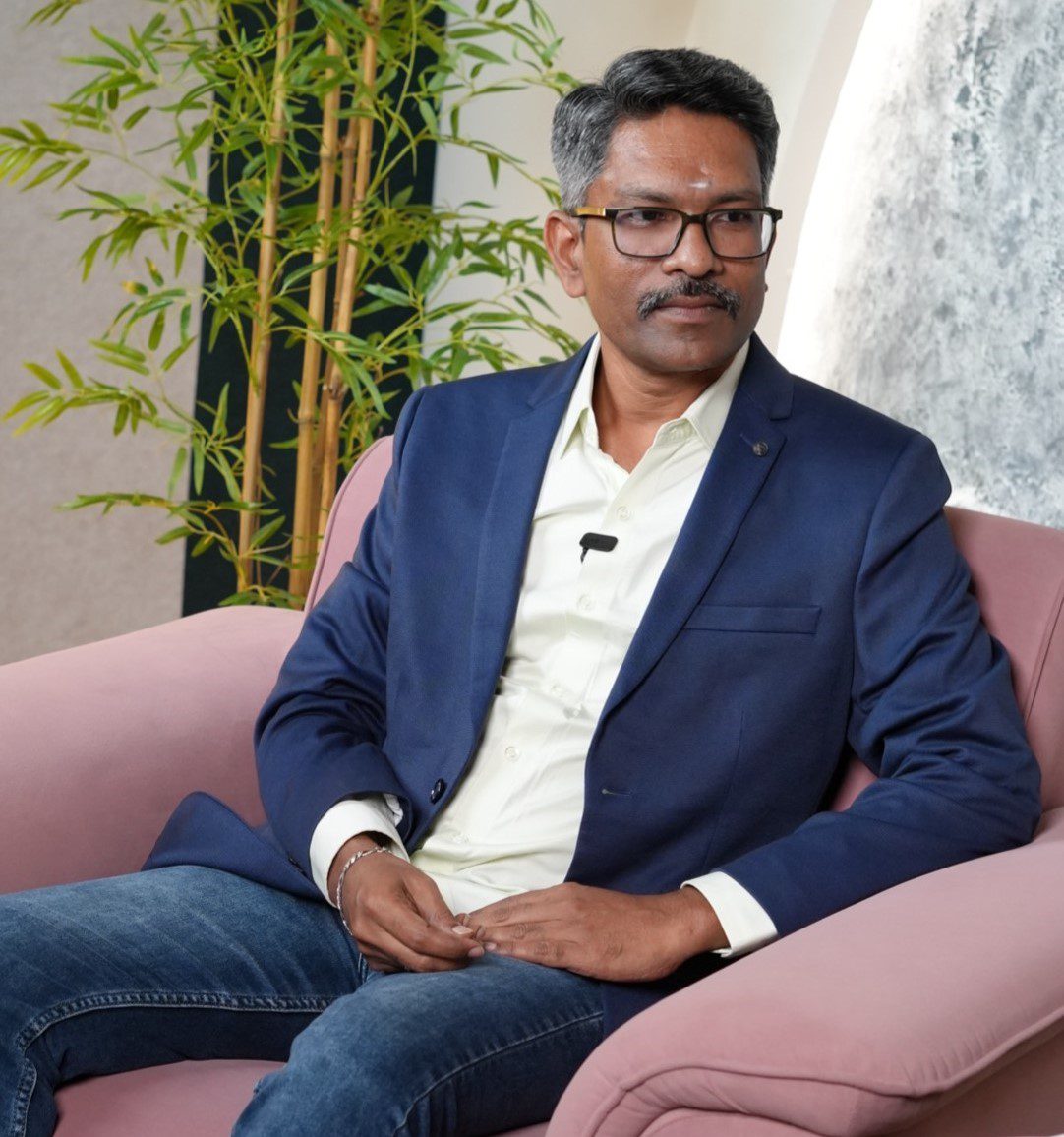
About the Speaker
Murugaraj Shanmugam
Founder of Tholga Research Consulting and an academic writing and publication coach with over 21 years of experience in the academic publishing industry.
He has mentored PhD scholars and faculty from institutions such as ISB, MIDS, Sathyabama Institute of Science and Technology, and Bharathidasan University.
His expertise includes manuscript preparation, journal submission strategies, and guiding researchers from research to successful publication.
Begin Your Writing Journey
If you are ready to write with structure and purpose, EzhudhuGoal offers a guided path.
Serious scholarship grows from disciplined practice.