Previously, we discussed the many benefits of taking the open-access publishing route, such as larger visibility, widespread access, and citation advantage. You might immediately think, “Oh, this is going to cost a bomb!” and might ask me, “How could you suggest OA when the charges are so high?”
True, OA charges for many reputable journals are so high that keeps you from considering OA as the first choice. But if you dig deeper, you will find options that will not burn your wallet.
Another important consideration is negotiating with the journal. With subscription journals, it is simple: You don’t negotiate with them at all! You hand over your paper’s rights on a platter to the journal in return for it to get published. With OA journals, there are quite a few considerations.
In this article, we will look at the important factors that will help you decide on your next publication.
Article processing charges (APC)
It is not article “publishing” charges; if it is so, you are looking at a predatory journal. If you are not sure about how to identify predatory journals, go back to our previous article on predatory journals. Article processing charges are the “processing charges”. They range from nothing to a few thousand dollars/pounds. You will be asked to pay this APC only after your article has been accepted for publication following a regular peer-review process.
How much do you pay for open-access publishing?
Since open-access journals operate based on an author-pays model, authors must pay APCs or page fees.
APCs are determined based on criteria like journal quality, editorial and technical processes, competitive factors, market conditions, and other revenue streams associated with the journal. Generally, in an open-access journal, the APC accounts for both retrospective and prospective coverage, including peer-review management by the editorial staff or board, manuscript preparation (e.g., copyediting), journal production (e.g., layout), open-access online publication and hosting, indexing (e.g., in PubMed), and archiving.
Are fee waivers available to support researchers?
Most open-access publications that entail author publishing charges do not mandate payment of fees in full. They also offer discounts related to institutional membership programs, the authors’ society membership, or waivers of service (such as if in-house copyediting is not needed).
Moreover, the author need not have to pay full or even discounted fees due to waivers based on either financial hardship or the authors’ country of origin’s economic status or due to coverage by the authors’ institution, department, or funder/grant. For instance, Elsevier automatically applies APC waivers or discounts to those articles in gold open-access journals for which all author groups are based in a country eligible for the Research4Life program.
Many journals and publishers allow researchers to submit and publish a research article without APC. Many other open-access journals also provide a possibility of free publication if the quality of the research and article is top-notch.
Funding Agency Mandates
Many funding agencies mandate OA publication for the research they support to ensure that the findings are widely accessible and can have a broader impact. When researchers receive funding for their projects, the grant agreement may include a clause stipulating that any resulting publications must be made openly accessible.
Do you know?
Sharpa Romeo offers open access information about journals and publishers. Sherpa Juliet provides funder requirements in terms of open access publication for their fund recipients.
Embargo period
This is the time period your article will be exclusive only to subscribers if you publish in a subscription journal. Non-subscribers will have to pay to access the article. Individual articles are usually in the range of $30-$50.
All articles become free for the reader after a certain period of time (the embargo period). For OA, there is no embargo.
OA options

Whilst in a traditional subscription-based model, a researcher can entrust the publishers to handle everything, opting for open access involves making a few decisions on the part of the researcher. Whether an author chooses to publish their research article in a fully OA journal, a hybrid or transformative journal, or as an OA book or OA chapter it is crucial to be aware of all the OA policies available to them. While most publishers support immediate Gold OA as the most open, least restrictive form of OA, listed below are some of the other options to be considered.
Common open access options available for researchers
Gold OA – The most common form, Gold OA describes a publishing model in which the final published version of a record is made permanently available, free of charge, and without any restrictions.
Gold OA typically involves the payment of an article processing charge (APC), which can either be funded by the authors themselves or a third party, such as a funding council.
Green OA – Authors deposit their accepted manuscripts (but not necessarily the final published version) in an open access repository, like their institutional repository or subject-specific repositories. Readers can access the work freely, although access times and conditions may vary depending on the repository and publisher policies.
Typically, the publisher sets an embargo period, which can range from 6 to 24 months. Publishing as Green OA incurs no additional charges.
Bronze OA – Bronze articles are available to read for free on the publisher’s website, but they don’t come with a Creative Commons license that grants users any additional rights. It’s possible that there may be a delay between the publication date and the availability of the article to read, and sometimes, authors aren’t charged an APC (article processing charge) to publish their articles.
Gratis OA – This type of access allows publishers to make a paper available for free to readers, without charging the authors – usually for marketing and promotional activities. However, this Gratis Open Access is not a permanent arrangement and traditional copyright and licensing agreements still apply. This option is, sometimes, not considered to be ‘true’ Open Access.
Libre OA – This term describes open-access papers that can be shared and reused based on the license used. The minor difference between Gratis OA and libre OA is that while both remove price barriers, libre OA also removes one or more permission barriers. For instance, if copying a short excerpt is permitted by ‘fair use’, then it means there are no permission barriers in the way.
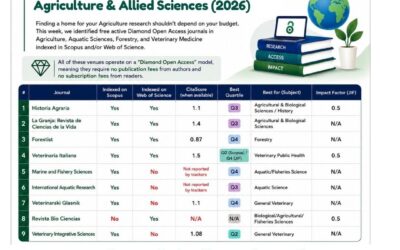
Diamond OA – Diamond open access refers to journals where readers and authors can access and publish without any cost. This type of open-access publishing is community-driven and often funded by institutions or infrastructure.
How do you choose the publication route?
So depending on the expectations and mandates, following are the factors that you should consider before making the decision:
- Funder requirements: If your funding body mandates that the article be published via OA, you don’t have to think twice. In this case, your funding will usually come with a spending item called publication or something similar.
- Your affordability: If you don’t have a funder, then it all boils down to how much you can afford and what waivers you have.
In a country like India, cost plays a more influential role than the desire to reach more readers and thus to improve a researcher’s h-index. You need to look up the journal’s web site and find information about what options are available. This will help you make an informed decision.